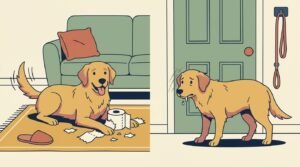
You just got home from work. Your shoes are barely off, and you’re already clipping on the leash. Your dog pulls, sniffs, and sprints while you drag your exhausted self through a nearly two-hour walk.
You get home expecting to sit down. Instead, the couch arm has become a chew toy, the throw pillows are undergoing a stress test, and someone walks past the front door. Now your dog is barking like the neighborhood alarm system. You’re worried about the neighbors while trying to take a call over the noise.
You love your dog. You’re just tired. Really tired. If this sounds familiar, this Brain Training for Dogs review will help you decide whether Adrienne Farricelli’s 21-game course offers a practical way to add mental stimulation—and where a self-paced course has limits.
Here’s the thing: your dog may not be the problem, and the answer may not be a longer walk. If running and long walks are the only ways you try to burn off energy, your dog may simply build more stamina. Dogs also need chances to sniff, think, practice waiting, and learn how to settle after getting excited.
That’s the idea behind Brain Training for Dogs: a series of progressive games designed to add mental work, focus, and impulse control to your dog’s routine. With consistent practice, the course aims to help dogs behave better, respond more reliably to cues, and build a stronger bond with their owners. It isn’t an off switch, and it can’t guarantee that barking, destructive behavior, or anxiety will disappear overnight.
According to her bio on the course website, creator Adrienne Farricelli is a CPDT-KA-certified dog trainer, and her work has been featured in USA Today and Every Dog magazine.Author and course information That background helps you understand who created the course, but it doesn’t mean every claim about the course has been independently tested.
Affiliate disclosure: I may earn a commission if you buy through links in this article. Your price stays the same. This review is based on the course’s published materials, refund information, and dog-training resources.
Table of Contents
The “Hyper Dog” Trap: Why More Exercise is Making Your Dog Worse
Exercise matters. Dogs need walks, movement, and time to explore. The problem starts when the answer to every “my dog is barking” or “my dog is destroying things” moment is simply another lap around the block. That can turn into an endless fitness program.
Dogs can adapt to regular exercise. As your dog gets fitter, the distance that used to tire them out may not be enough. You put in more time, and your dog becomes an even stronger running partner. Congratulations: you may have trained a marathon runner who still chews the couch.
High-intensity games like chasing a ball or sprinting can also leave some dogs more worked up. After exercise, dogs may still need practice settling down. Otherwise, they catch their breath and go right back to patrolling the living room.
That doesn’t mean every behavior problem comes from a lack of mental stimulation. Destructive behavior or barking can also be related to teething, a lack of appropriate chew items, difficulty being alone, the home environment, physical discomfort, or other stressors. If the behavior starts suddenly, your dog panics when left alone, or there’s a risk of injury or aggression, don’t try to fix it by adding more games. Talk with your veterinarian or a qualified behavior professional.
A more balanced daily routine might include:
- Walks and sniff time so your dog can explore.
- Short training sessions for focus, waiting, and basic cues.
- Safe chew items or puzzle activities.
- Intentional downtime so your dog can practice relaxing.
The goal isn’t to exhaust your dog into collapsing. It’s to give their body and brain appropriate things to do.
The Science Behind the Course: Physical vs. Mental Stimulation
Physical activity and mental stimulation meet different needs. They complement each other; one doesn’t replace the other.
Walks, running, and play get your dog moving and give them opportunities to sniff and explore. Brain games ask your dog to notice, sniff, wait, try, and solve a small problem. During a game, your dog practices focusing and learning which actions lead to a reward. Some dogs may be more ready to rest after a short, engaging activity.
That doesn’t mean “15 minutes of brain work is always better than an hour-long walk.” There’s no universal formula that converts one kind of activity into the other. The effects depend on your dog’s age, health, temperament, interests, and the difficulty of the activity.
A small environmental-enrichment study observed 10 assistance dogs and found changes in relaxation, alert, and stress-related behaviors after different activities. The effects varied by activity, and the authors noted that more research is needed.Study on environmental enrichment and dog behavior The study did not test Brain Training for Dogs, and it did not show that a brain game can cure barking, separation anxiety, or destructive behavior.
A realistic way to think about this course is as a collection of at-home mental activities that can add variety to your dog’s routine. It doesn’t replace walks, veterinary care, or an individualized behavior plan.
How 1 Minute of “Brain Training” Can Calm Your Dog’s Anxiety Instantly
Let’s be clear about the word “instantly” in the headline: a one-minute game may help your dog focus on you and the activity for a short time. That doesn’t mean it cures anxiety or will instantly calm every dog. Separation anxiety and fear-related behavior require an approach suited to the individual dog.
The value of a brain game is that it gives your dog a chance to sniff, try, make a choice, and earn a reward. Research has found that different forms of environmental enrichment can be associated with changes in dogs’ relaxation behaviors, but the effects vary by activity and by dog. There’s no reliable conversion that says “15 minutes of mental work equals one hour of running.”
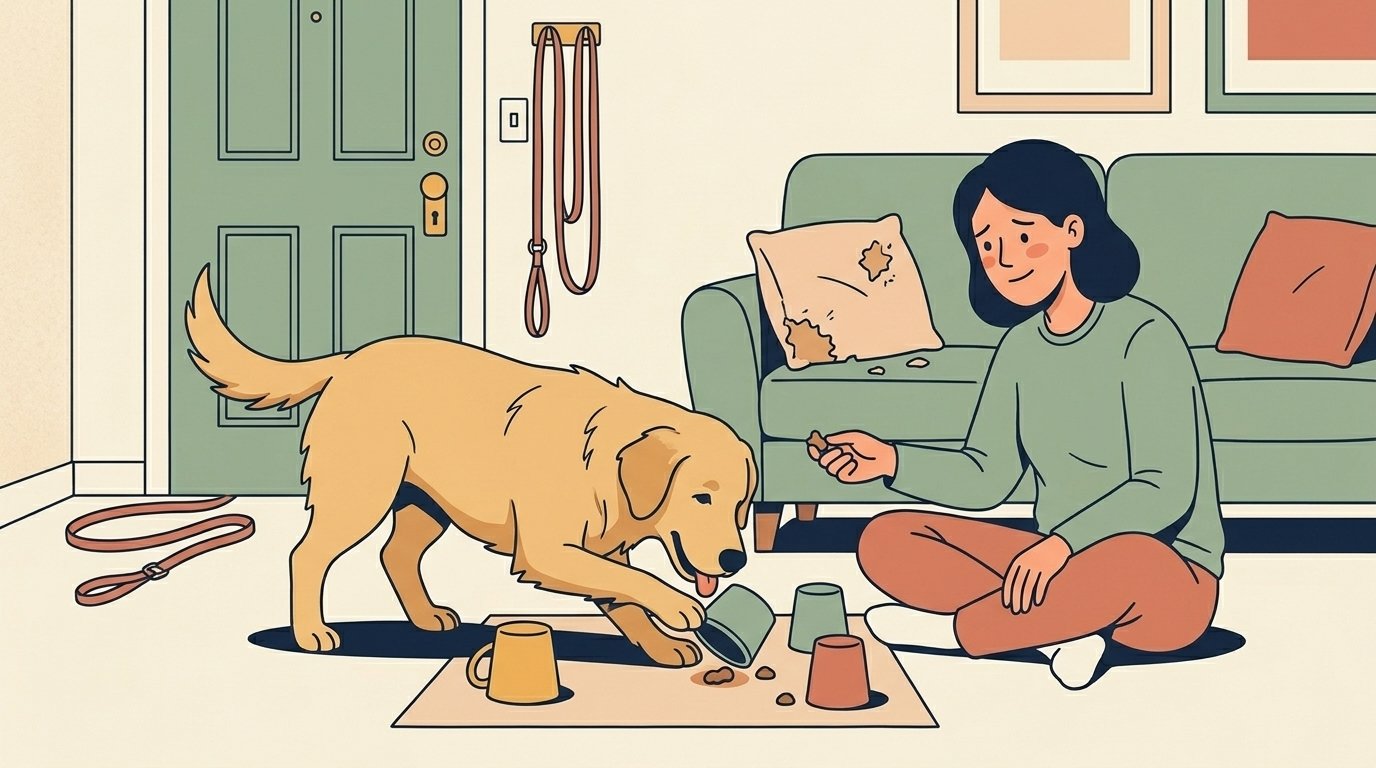
A One-Minute Treat-Hiding Game with a Mug
Get a sturdy, non-breakable cup your dog won’t chew or swallow, plus a few treats your dog can safely eat. Supervise the whole game.
- Let your dog watch as you place one treat under the cup.
- Say “Find it” and let your dog sniff and nudge the cup aside.
- When your dog finds the treat, let them eat it and praise them calmly.
- If your dog gets it quickly, try another round. If they start chewing the cup or lose interest, put it away and make the game easier.
Don’t start with a magician’s shuffle routine. We’re teaching your dog to succeed, not signing them up for a casino table game.
Watch your dog’s body language. Are they sniffing on their own? Do they want to keep playing? Can they pause for a moment after finding the treat? If they seem frustrated, make the game easier or stop. This should be fun, not a final exam in the living room.
Brain Training for Dogs Review: What’s Inside the 21-Game Course?
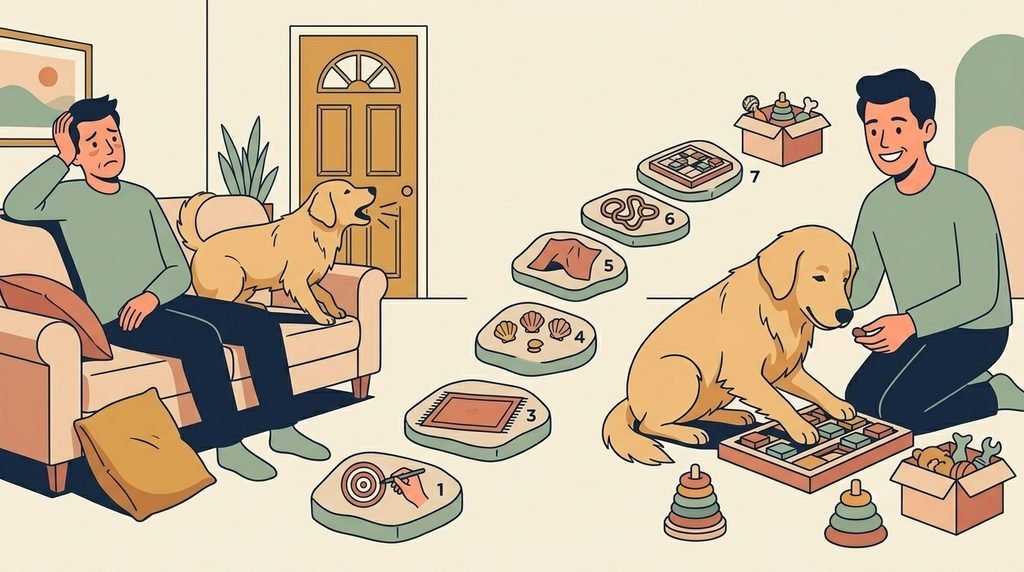
Brain Training for Dogs is a digital course. The course page lists 21 games and exercises across seven levels, from Preschool to Einstein. The structure starts with basic communication and focus, then gradually adds impulse control, problem-solving, and coordination challenges.Course content and levels
| Level | Focus | Examples listed on the course page |
|---|---|---|
| Preschool | Building attention and interaction | Target Train, eye contact, Airplane Game |
| Elementary School | Encouraging sniffing and exploration | Treasure Hunt, Muffin Game, Ball Pit Game |
| High School | Practicing patience, impulse control, and settling | Jazz Up and Settle Down, Bottle Game |
| College | Building focus, coordination, and patience | Shell Game, Open Sesame, Magic Carpet |
| University | Practicing patience, searching, and responding to distractions | Hide and Seek, Look at That, Hot and Cold |
| Graduation | Practicing more complex movements and following | Leg Weaving, Serpentines and Spirals, Name Recognition |
| Einstein | Taking skills and cooperation to a more advanced level | Tidy Up, Ring Stackers, Play the Piano |
The main advantage is the sequence. You’re not handed ten unrelated “magic dog-training hacks” from the internet and told, “Good luck.” Along with game demonstrations, the course page lists obedience training, a behavior-problem resource library, troubleshooting materials, a member area, and a way to submit questions. The course resource page also offers digital materials such as PDF score sheets.Course resources and equipment list
Still, it’s important to understand what you’re buying: a course structure and practice materials, not a trainer who comes to your home every day to observe your dog and adjust each step in real time. The behavior improvements described by the seller are course claims, not guaranteed outcomes for every dog.
The Practical Trade-Offs: What to Know Before Buying This Course
These aren’t made-up, supposedly verified buyer complaints. They’re practical limitations you can infer from the course format and its published equipment list—and they’re worth considering before you buy.
- There isn’t a trainer watching your dog in real time. The course page mentions question support and a member forum, but that’s not the same as having a trainer step in when a dog is about to bite. If your dog has serious aggression or has bitten a person or another animal, a self-guided video course can’t replace a veterinarian or qualified behavior professional.
- Some games require supplies or DIY substitutes. You may need a muffin tin, tennis balls, a ball pit, training cones, plastic rings, or puzzle toys. The course equipment page lists common items and some household alternatives. Still, if you expect to need no supplies at all, you may find the setup inconvenient.
- Digital-only lessons can be awkward at first. You may be watching a video or PDF, preparing treats, checking whether your dog got the exercise right, and stopping them from trying to eat the props—all at once. The course uses an online member area and digital materials, not a printed manual you can leave open on the floor.
- You have to keep practicing. Watching a lesson today, forgetting to practice tomorrow, and blaming the dog next week won’t get you far. Short sessions built into a routine are more realistic than practicing until both of you want to quit.
Here’s the simple filter: if you don’t plan to practice consistently, save your money. If your dog has serious aggression or bite risks, get professional help first. If the main issues are boredom, excess energy, or trouble settling at home—and you’re willing to spend a little time practicing each day—this structured set of games may be useful.
Why Force-Free, Positive Reinforcement is the Only Way That Lasts
“Only Way That Lasts” is a strong headline. A more precise point is this: Force-Free, Positive Reinforcement is a training approach supported by veterinary behavior organizations, but no course or method can guarantee that it will solve every problem on its own.
Positive Reinforcement means rewarding the behavior you want—using treats, play, or praise—so your dog is more likely to repeat it. It doesn’t mean letting your dog do anything they want. You can still set boundaries, manage the environment, and teach alternative behaviors.
The American Veterinary Society of Animal Behavior (AVSAB) recommends reward-based methods for dog training and notes that aversive methods can carry welfare risks, including stress. Serious fear, aggression, separation anxiety, or compulsive behaviors may also require a veterinary evaluation and an individualized plan.AVSAB position statement on humane dog training
So don’t mistake positive training for “just hand out treats and your dog will magically behave.” You still need to practice, prevent your dog from repeatedly getting pushed into situations they can’t handle, and get professional help when needed.
Brain Training for Dogs: A Budget-Friendly Alternative to Thousands in Trainer Fees
The course sales page says that hiring an in-home trainer could cost up to $350 per hour and gives an example of a full day of consulting costing $3,300. These are comparisons provided by the product page, not standard rates across North America. Actual costs vary by location, service, and the dog’s needs.Course pricing and fee comparison
The same page currently lists the course at $67 and advertises a 60-day money-back guarantee. Check the checkout page for the current price and terms before buying. Saving money is only part of the benefit. When you practice these games with your dog, you get short, positive moments to learn each other’s cues and celebrate small wins. With patience and rewards, those sessions can help build trust, improve communication, and create a stronger bond between you and your dog.
| Comparison | In-home dog trainer | Brain Training for Dogs |
|---|---|---|
| Cost | The course sales page says in-home training can cost up to $350 per hour. That’s the product page’s comparison, not a universal market rate. | The course page currently lists a one-time price of $67. Confirm the price and access terms at checkout. |
| Flexibility | Usually requires scheduling around the trainer’s availability. The trainer can observe your dog in your home. | You can watch the materials and practice on your own schedule. Best for owners who can manage their own progress. |
| Real-time feedback | A trainer can observe your dog and adjust the approach in the moment. | Includes course materials, question support, and a forum, but not a trainer physically present in real time. |
| Risk of trying it | Each session costs more; multiple sessions add up. In-person assessment can be valuable for complex behavior problems. | Lower upfront cost and a 60-day guarantee listed on the course page. You still need to put in the time and follow the lessons. |
It’s not as simple as “online is always a better deal than hiring a trainer.” An in-person trainer offers individualized observation and immediate feedback. An online course offers a lower entry price and more scheduling flexibility. If your dog’s behavior creates a safety risk, prioritize a professional evaluation.
How to Get Started Today Without Risking a Single Penny
Start with a small test: try the one-minute cup game and see whether your dog is interested in sniffing and figuring it out. Notice whether they can settle a little after finding the treat. This isn’t a diagnosis, but it can help you see how your dog responds to a simple brain game.
“Without risking a single penny” refers to the advertised money-back guarantee. It doesn’t mean there’s no time commitment, no setup, or a guaranteed behavior change. Check the checkout price and refund deadline. If the course isn’t a fit, submit your request before the applicable deadline.
If you want more progressive exercises, the course page currently lists the price at $67 and advertises a 60-day money-back guarantee. If you’ve decided to give it a try, you can also visit the course here:
👉 Explore Brain Training for Dogs
One last honest thought: If you need a trainer to observe your dog in person and help with a serious behavior problem, hire a professional. If you’re looking for a set of at-home games to add mental enrichment to your dog’s routine, review the course and decide whether it fits your needs. Your couch arm will appreciate you giving that dog brain a job.
FAQ
How much does Brain Training for Dogs cost? Does the course really include 21 games?
The course page currently lists the price at $67. Check the checkout page for the current price and terms, since promotions can change.
The course page lists 21 games and exercises across seven levels, from Preschool to Einstein. It also lists digital materials, video demonstrations, and other training resources.
What behavior problems does the course cover besides hyperactivity?
The course sales page also lists topics such as:
- Potty training
- Lunging
- Jumping
- Digging
- Whining
- Chewing
- Excessive barking
- Impulse control
- Ignoring commands
These are topics the product page says the course addresses. That doesn’t mean the same videos will solve every dog’s behavior problem. For aggression, biting, or severe anxiety, get help from a qualified professional.
How long should I practice each day? Can brain games replace walks?
You can start with a few minutes and see whether your dog stays engaged, then build a consistent routine. Brain games don’t replace walks, sniffing, or appropriate physical activity. There’s no reliable formula that says a certain number of minutes of mental work equals an hour of exercise.
Do I need to buy a lot of equipment first?
Not necessarily. Some games can use household substitutes, while others may require supplies. Check the equipment list before you begin. If your dog chews or swallows props, supervise closely and choose items that are sturdy and too large to swallow.
Can this course address aggression, biting, or separation anxiety?
Don’t rely on an online course as the only response to serious behavior problems. If your dog bites, shows aggression, panics when left alone, or may hurt themselves, contact a veterinarian or qualified behavior professional for an assessment and an individualized plan.