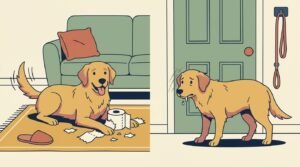
You open the front door, and your dog is already pulling on the leash. At the corner, a squirrel, bike, or approaching dog grabs their attention. You tighten your grip and try to predict what will happen next. A walk that should be enjoyable turns into a tug-of-war. This is common, and it does not mean your dog is being stubborn. They may not yet know how to explore on leash, or the sights and noises around them may be more than they can handle calmly.
This guide starts in your living room and works up to neighborhood sidewalks. You’ll learn the difference between loose-leash walking and heel, choose the right equipment, and practice stopping, turning, and responding when your dog notices another dog or a bike.
The goal is not to make every walk look like an obedience trial. It is to give you practical ways to handle pulling while still letting your dog sniff safely. If you’d also like to add short brain-training activities at home, see this Brain Training for Dogs course overview. The games described there can help you practice focus and emotional steadiness daily. This article stays focused on leash skills rather than evaluating the course in detail.
Table of Contents
1. What Is Leash Training? The Core Principles Explained
Leash training teaches a dog how to move safely within the limits of a leash, understand leash cues, and work with their person. For everyday walks, the most useful goal is loose-leash walking: your dog may walk ahead, beside you, or behind you, as long as the leash stays mostly relaxed and hangs in a natural U shape. Neither of you should be pulled along.
Loose-leash walking does not mean your dog has to watch you every step. Your dog can stop to sniff a tree or observe the neighborhood. At a crosswalk or on a busy sidewalk, you can ask them to come closer for a short stretch. This differs from heel. Heel asks a dog to stay close to your side, match your pace, and pay attention for longer periods. It is often used in competition, working roles, or brief trips through busy areas.
| Skill | Loose-Leash Walking | Heel |
| Position | Can vary in front of, beside, or behind you; leash stays loose | Stays close to a designated side in a more fixed position |
| Attention | Can explore and sniff, with occasional check-ins | Pays close attention to the handler |
| Best for | Everyday walks and exploring | Crosswalks, narrow sidewalks, work, or competition |
2. The Frustration of Walking a Dog Without Leash Training
A constantly tight leash can wear you out. Repeated pulling can leave your wrist, shoulder, or thumb base sore. If your dog suddenly chases a car or jumps toward a passerby, you could lose your balance or fall. If your dog barks at unfamiliar dogs, people, or bikes, consider walking early in the morning or late at night to avoid encounters. That does not mean you are failing as a dog owner. It may mean the walk is currently more challenging than you and your dog can comfortably manage.
When the leash tightens, people often pull back instinctively. Many dogs lean into the pressure and pull harder. Veterinary behavior professionals describe this as a common response to leash pressure. You can end up pulling against each other; that doesn’t mean your dog is deliberately challenging you. VCA’s loose-leash walking guide explains why dogs pull and how to get started.
| What You’re Worried About | A Helpful First Step |
| Wrist pain or falling | Use a well-fitted harness, avoid busy routes, and practice short sessions indoors |
| Barking at dogs or chasing bikes | Create more distance and practice looking at a trigger, then turning back to you; don’t force close-up greetings |
| Slipping out of gear or running into the street | Check the harness and clips for a secure fit; shorten the leash near crossings and turn before your dog rushes ahead |
| Picking up chicken bones or unknown items | Practice “drop it” and “leave it”; stay close and supervise carefully in high-risk areas |
3. Why Do Dogs Need Leash Training? 4 Science-Based Reasons That Matter
- More secure exploration in busy areas. A leash does not automatically teach a dog to feel comfortable around traffic, strangers, or sudden noises. Start at a distance where your dog can still eat treats and respond to you. Gradual practice can make new environments more predictable. In crowded places, always leave room to move away.
- Less pressure on the neck. A dog who regularly pulls against a collar may experience unnecessary pressure and discomfort. A tight collar puts pressure on delicate neck structures; in a dog with a collapsed trachea, that pressure can worsen coughing. This does not mean every pull causes tracheal collapse. If your dog coughs often or has trouble breathing, ask your veterinarian to assess them and discuss suitable walking gear. VCA on collars and harnesses; VCA on tracheal collapse.
- More time to sniff and explore. Sniffing is one of the ways dogs learn about their surroundings, and it provides sensory and mental enrichment. Letting your dog investigate in a safe spot better meets their need to explore than rushing them through the entire walk. A walk does not need to be a training drill every minute. The American Kennel Club describes sniff walks as a form of mental enrichment and notes that they do not replace all the other exercise a dog may need. AKC’s guide to sniff walks.
- A more predictable partnership. A leash does not have to be just a restraint. When a loose leash lets you move forward, sniff, and earn rewards, your dog can learn to communicate with you by keeping the leash relaxed. The American Veterinary Society of Animal Behavior recommends reward-based methods for teaching behavior and advises against using pain or fear as punishment. AVSAB’s humane dog training position statement.
4. DIY Step One: Essential Leash Training Gear for U.S. Dog Owners
- A standard fixed-length leash: Start with a 6-foot leash, which is easy to manage for everyday walks. A retractable leash gives a dog more room to pull, which can make it easier for them to learn that pulling moves them forward. Retractable leashes can also be harder to control around crowds, crossings, and training distractions. They are not unsuitable in every situation, but it is easier to start with a fixed leash and consider other options later. AKC leash-training advice.
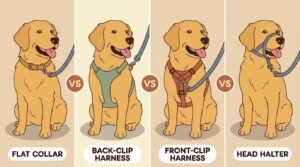
- A well-fitted front-clip harness: When the leash clips to the front ring, you can gently guide a dog who surges ahead to the side. A harness also keeps leash pressure off the neck. Check that it doesn’t rub under the legs, restrict shoulder movement, or let your dog back out of it. A harness is a management tool; it doesn’t teach loose-leash walking on its own. VCA on how front-clip harnesses work.
- Treats and a treat pouch: Bring small treats your dog eagerly eats. Kibble may work in a quiet room; save higher-value rewards, such as plain cooked chicken, for outdoor practice or harder distractions. Give cheese or hot dogs only in tiny pieces because they can be high in fat or sodium. Consider your dog’s allergies, health needs, and daily calorie intake. Keep treats small enough to swallow quickly so you can keep practicing.
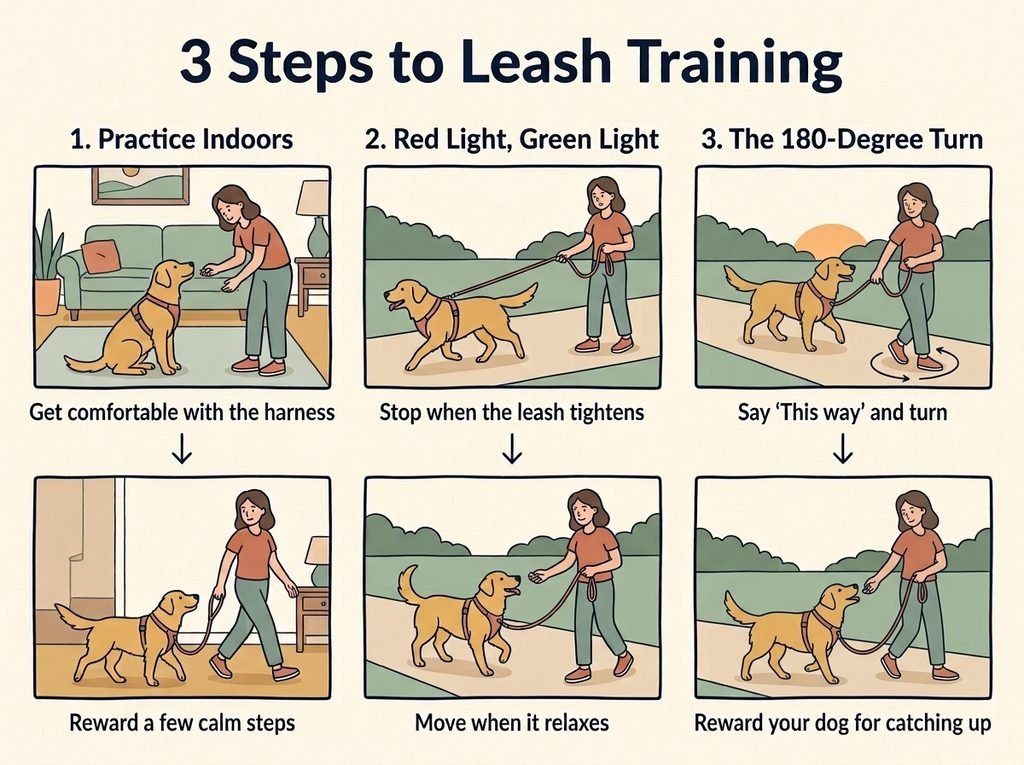
5. Three Steps to Leash Training: From the Living Room to the Outdoors
Stage 1: Practice Indoors With Few Distractions
If your dog cannot yet check in with you in the living room, a busy park will be much harder. At home, reward your dog for noticing the harness. Put it on, offer a few treats, and then take it off. Once your dog is comfortable, clip on the leash and walk a few steps in a quiet room. Hold a treat near your side to guide your dog beside you. After one or two steps, say “Yes!” and give the treat. Gradually fade the food lure and reward your dog for following you. Keep each session to one to three minutes.
Stage 2: Red Light, Green Light
Practice in a quiet hallway or backyard. When the leash tightens, stop without jerking it or dragging your dog back. Wait for your dog to turn toward you, take a step back, or otherwise loosen the leash. Say “Yes!”, reward, and start walking again. Your dog learns: a loose leash keeps the walk moving; a tight leash pauses forward progress. If your dog keeps pulling, gets frustrated, or starts jumping, the exercise may be too difficult. Move back indoors or practice turning to find you.
Stage 3: The 180-Degree Turn (Pull a 180)
If your dog keeps charging ahead and is not responding to you, calmly say “This way” and turn to walk in the opposite direction. Reward your dog as soon as they catch up. Teach this game first in an easy place, then try it outdoors. Keep the leash short enough for safety, but do not jerk your dog around. Add only one challenge at a time on each outing: a little more traffic noise, a new route, or a few extra minutes. If pulling increases again, return to the last level where your dog could succeed.
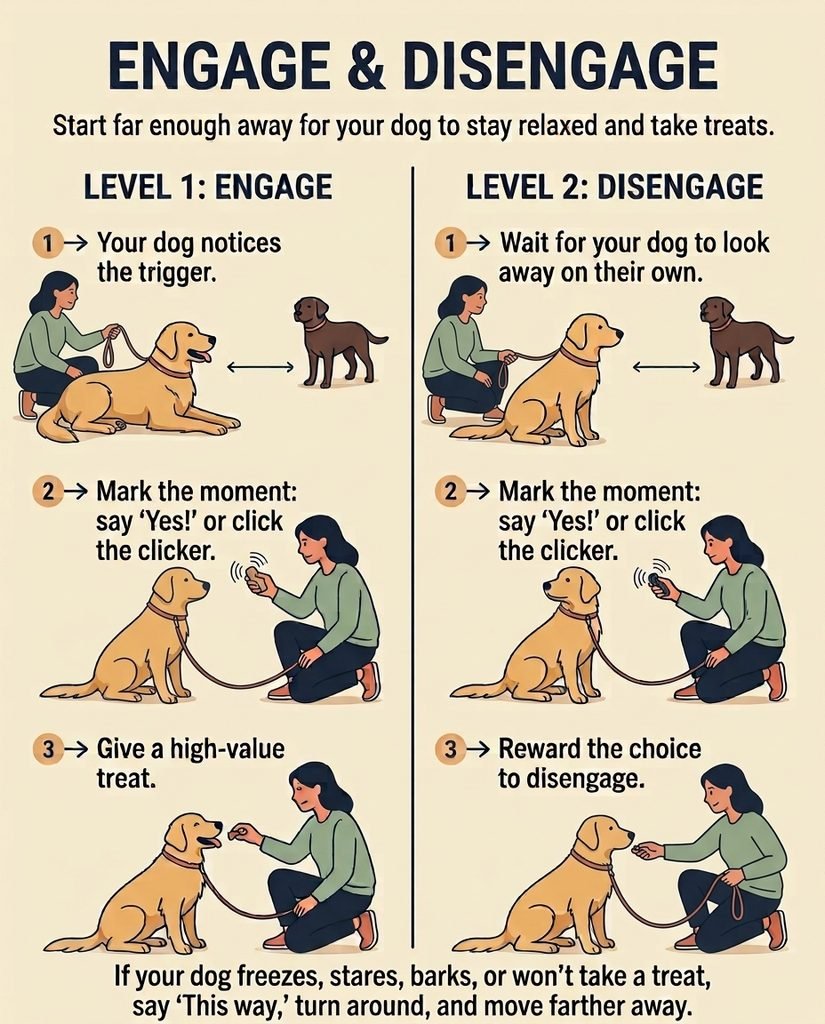
6. An Effective Aid for Leash Reactivity: Engage-Disengage (Look-at-That Training)
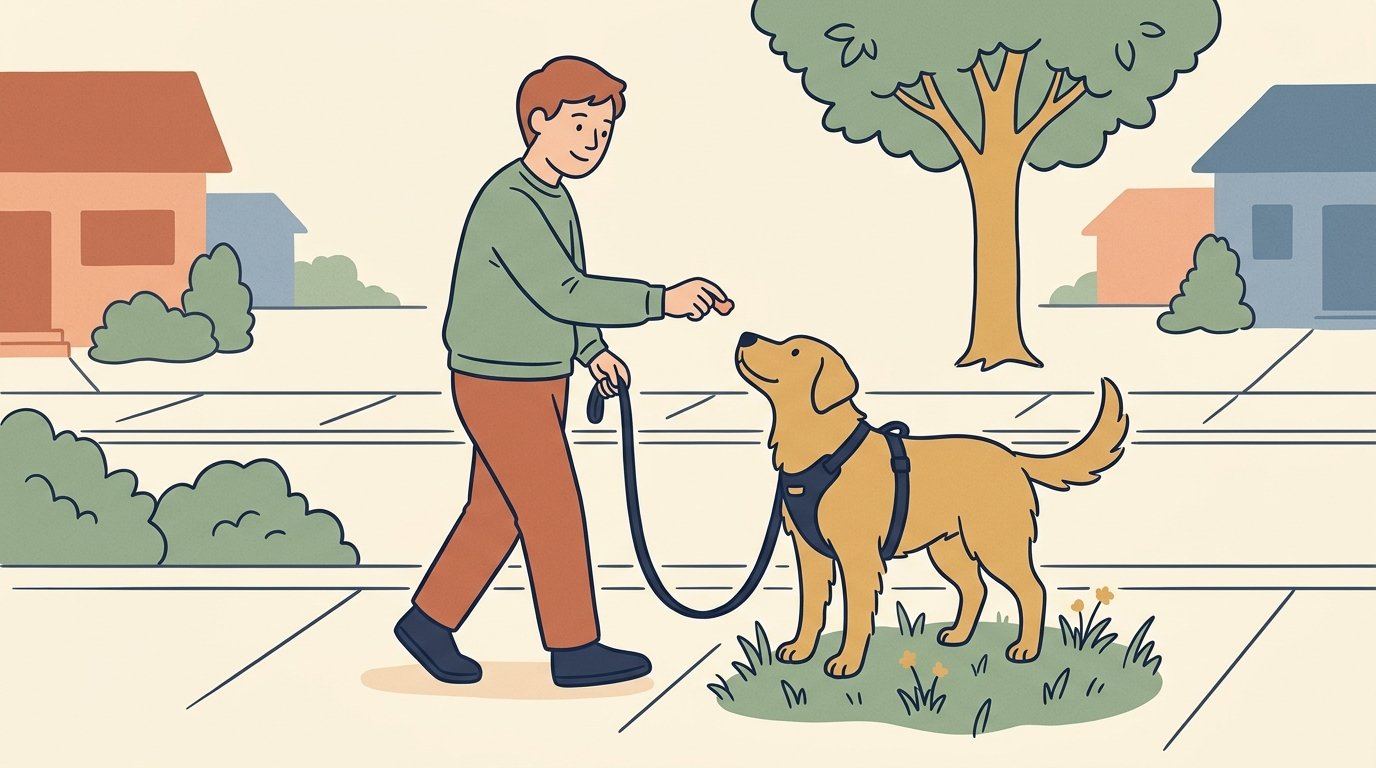
If your dog stares, barks, or lunges when they see another dog, a squirrel, or a bike, don’t move them closer. Find a safe distance where your dog can see the trigger while staying fairly relaxed and willing to eat. There is no one correct distance. If your dog freezes, stares continuously, barks, or refuses a favorite treat, move farther away. This is the starting point for desensitization and counterconditioning: the trigger appears, and something safe and rewarding happens too.
- Engage (notice the trigger): The moment your dog notices the trigger on their own, click or say “Yes!” and give a high-value treat. Mark the calm look—not barking followed by a cue to look back at you.
- Disengage (look away): Once your dog is comfortable with the first step, let them look at the trigger and wait to see if they turn their head, blink, sniff the ground, or shift their attention on their own. Mark and reward the moment they choose to stop staring. Avoid rushing to say “Look at me.” The goal is to reinforce a choice your dog makes voluntarily.
- If the trigger is too close, leave: Do not stay in place and push through the exercise. Say “This way,” make a U-turn, and move briskly farther away before trying again. If your dog has bitten or injured a person or animal, or you cannot safely manage the reaction, ask a veterinarian and a qualified reward-based behavior professional for a plan. Karen Pryor Clicker Training’s Engage-Disengage guide; VCA on desensitization and counterconditioning.
7. Walking Etiquette: U.S. Dog-Walking Culture and Neighborhood Rules
Use different cues for different situations so your dog can tell what you are asking. “Go sniff” means they can explore within a safe area. “With me” means they should come closer for a short stretch at a crosswalk, on a narrow sidewalk, or when someone is passing. These signs aren’t a request to stare at you the entire walk. They tell your dog when to switch modes.
Leash rules vary by U.S. state, county, city, and park system. Before heading out, check local leash laws, designated off-leash areas, and leash-length limits; violations might lead in a fine, and the amount depends on the location.
Follow posted rules at parks, trails, and dog parks. An off-leash rule inside a fenced dog park does not mean the path leading to it is also off-leash. AKC reminds dog owners to check local leash rules. When you meet pedestrians, runners, strollers, or other dogs, move to the side and shorten the leash. Do not let your dog approach without the other person’s permission. If you see a yellow ribbon on another dog’s leash, treat it as a request for space and give that dog room. Not everyone recognizes the signal, so the handler still needs to manage distance. AKC on the yellow ribbon and dogs who need space.
Leash-training progress is seldom a direct line. Your dog may walk ten steps nicely in the living room today and pull again tomorrow when they spot a squirrel. That doesn’t erase what they have learned. Make the next practice easier, reward the moments when the leash relaxes, and build walks around a mix of safe sniffing and cooperative walking. That is a goal you can keep up over time.
Frequently Asked Questions (FAQ)
How long does it take to improve leash pulling?
There is no fixed timeline. Age, past experiences, distractions, and how often you practice all matter. Start with short indoor sessions or a quiet route. Gradually add distractions as your dog becomes more consistent. If your dog pulls again in a new setting, return to an easier place to practice. That does not mean the earlier learning is gone.
I stop when the leash gets tight, but my dog keeps pulling. What should I do?
Make the exercise easier. Choose a route with fewer people and cars, shorten the session, and turn or reward your dog for checking in before the leash gets tight. Make sure your dog has had a chance to potty, rest, and sniff. If they are already overexcited, move away from the trigger and try again later. Do not jerk the leash or scold them.
Can I teach loose-leash walking if my dog barks at other dogs?
Yes, but start with safety and emotional distance. Find a distance where your dog can see the other dog, stay relaxed, and eat treats. Practice Engage-Disengage there; do not expect your dog to walk past another dog at close range. If your dog has bitten a person or animal, or you cannot safely control them, ask a veterinarian and a qualified professional who uses reward-based methods to create a training plan.
Will a front-clip harness stop my dog from pulling?
Not by itself. A front clip can help you gently guide your dog to the side when they surge forward, and it keeps leash pressure off the neck. Pair it with rewards, stopping, and turning practice. Make sure the harness does not rub under the legs, restrict shoulder movement, or let your dog back out of it.
Can I let my dog sniff throughout a loose-leash walk?
Yes, when the area is safe and allows dogs. Use “Go sniff” to give your dog time to explore and “With me” to bring them closer at a crossing, on a narrow path, or when someone is passing. Sniffing is part of a walk. Near traffic, trash, or unknown food, use a safety cue such as “Leave it” and keep the leash under control.