A new puppy can turn a living room rug into a very expensive pee pad in less than a week. You clean one spot, turn around, and find another. Then you search for help and find advice that says to take your puppy out every 30 minutes. That may work when someone is home all day. It is a tough plan for someone with a commute, meetings, and a job that does not pause for puppy potty breaks.
Reddit discussions do question whether a puppy can be house-trained in seven days. They also include owners describing frequent potty trips every 20 to 30 minutes while a puppy is awake. But that does not mean every Reddit user rejects a seven-day plan, or that all training requires someone to watch a dog every second. The real problem is practical: puppies need frequent chances to go, while many owners cannot be home all day. This review looks at whether Dog Potty Training in 7 Days offers a useful way to connect training with a working schedule.
Editorial disclosure: This review is based on the product’s sales page and public training guidance. This article contains promotional links. Pricing was checked on October 7, 2026, and product details, prices, and refund terms may change; confirm them on the sales and checkout pages.
Table of Contents
The Multi-Million Dollar Question: Can You Really Housebreak a Puppy in One Week?
The honest answer: You may build a consistent potty routine in seven days. You cannot count on every puppy to be accident-free by day seven. House-training is not a light switch. A puppy has to learn where to go, when opportunities happen, and which behavior earns a reward. Age, size, health, home setup, and daytime care all affect progress.
It is more realistic to think of “7 Days” as a starter plan: connect meals, naps, play, potty trips, and rewards into a repeatable routine. It is not a magic spell that gives a puppy an adult bladder by midnight on day seven.
The American Kennel Club (AKC) notes that potty timing depends on a puppy’s age and routine. Young puppies, especially toy breeds, may need more frequent trips. Trips after waking, eating, drinking, and playing can help prevent accidents. The AKC also cautions that house-training takes patience and does not happen overnight. AKC’s puppy potty-training timeline
A week can help you move from guessing to recognizing patterns. It cannot make a young puppy’s bladder physically mature before it is ready. When you evaluate a training guide, ask whether it makes a routine easier to follow, not whether it promises the same finish date for every dog.
What Reddit Says: The “24/7 Lockdown” Myth
Search Reddit for puppy potty training and you will find two familiar reactions. One owner recommends taking a puppy out every 20 to 30 minutes while awake. Another asks how a full-time worker is supposed to manage that. In one r/puppy101 thread, a future owner of a 9- to 10-week-old puppy who works full-time describes a plan with a sitter visiting during the day. Replies warn that a puppy that young may need more frequent breaks and that a long afternoon gap could be too much. Reddit: A full-time worker’s puppy potty schedule
Another r/puppy101 discussion includes owners who take puppies out every half hour while awake, alongside owners who say a strict, minute-by-minute schedule does not fit every household. These are personal experiences, not a controlled study. Still, they show why common frequency advice can be hard to follow during a real workday. Reddit: Puppy routines and potty schedules
The myth to challenge is not that supervision is useless. When a puppy is loose at home, someone should watch for signals. The unrealistic part is turning “puppies need care and frequent potty opportunities” into “the owner must watch the puppy every minute.” Working owners need a plan that combines training at home with safe care and potty arrangements while they are away.
| Training need | Typical free-guide advice | The working-owner reality | Why this book may help |
| Frequent potty breaks while the puppy is awake | Many guides recommend trips after waking, meals, drinks, and play. Some suggest scheduling very young puppies every 30 to 60 minutes. | Commuting, meetings, and back-to-back work make a trip home every half hour unrealistic. | The product is built around working schedules and can give you a planning framework. If your puppy needs a midday break, you still need a family member, sitter, or dog walker. |
| Preventing indoor accidents | Watch closely and limit unsupervised freedom until the puppy is reliable. | Watching every move can interrupt work. Giving a puppy free access to the house can put the rug at risk. | The guide combines crate training and management concepts to organize rest, freedom, and potty trips. A crate is not a substitute for daytime care throughout a full work shift. |
| Building a predictable routine | Feed on a schedule and watch for patterns after meals, naps, and activity. | A busy day makes it easy to forget when the puppy last ate or went outside. | A feeding schedule and day-by-day steps can reduce guesswork and help you learn your own dog’s patterns. |
| Teaching the puppy to ask to go out | Watch for signals such as sniffing, circling, or going to the door; some owners teach a specific cue. | An owner cooking dinner or focused on work may miss subtle signals. | Bell training can create a clear cue, but it still takes repetition and rewards. A bell should not become a way to make a puppy wait when it needs to go. |
The AKC’s public guidance also recommends a routine, positive rewards, reading potty signals, and a safe area when you cannot supervise. It says owners should plan care if a puppy will be alone too long. Frequent potty trips are not “bad training”; the problem is assuming every household can follow the same schedule. AKC trainer tips for potty-training puppies AKC guidance on dogs spending time alone
👉 See the 7-Day Busy-Owner Schedule (60-Day Refund Guarantee)
The Reality: How This Book is Actually Built for Busy, Working Owners
The ebook’s pitch is not that a puppy should hold it until you get home or stay locked in a crate until the workday ends. It is that training can be organized around the parts of the day you can control. The sales page says the guide is designed for full-time workers, shift workers, and families, with daily steps, signal recognition, age adjustments, and troubleshooting. Product sales page: *Dog Potty Training in 7 Days*
In practice, the useful routine looks like this:
Keep meals predictable instead of grazing all day. Track meals, water, naps, and play so you can see how long it usually takes your puppy to need a potty break. Follow feeding guidance for your puppy’s age, food, and veterinarian.
Connect crate time, rest, and potty trips. Introduce the crate positively with treats and short sessions. Take the puppy to the designated potty spot after waking, then reward success there. The crate should not be punishment or a place to confine a puppy for too long.
Plan daytime care instead of asking a puppy to hold it. If a young puppy needs a midday break, arrange help from a friend, pet sitter, dog walker, or a safe pen and appropriate potty area. How long a dog can be alone depends on age, health, adjustment, and potty needs.
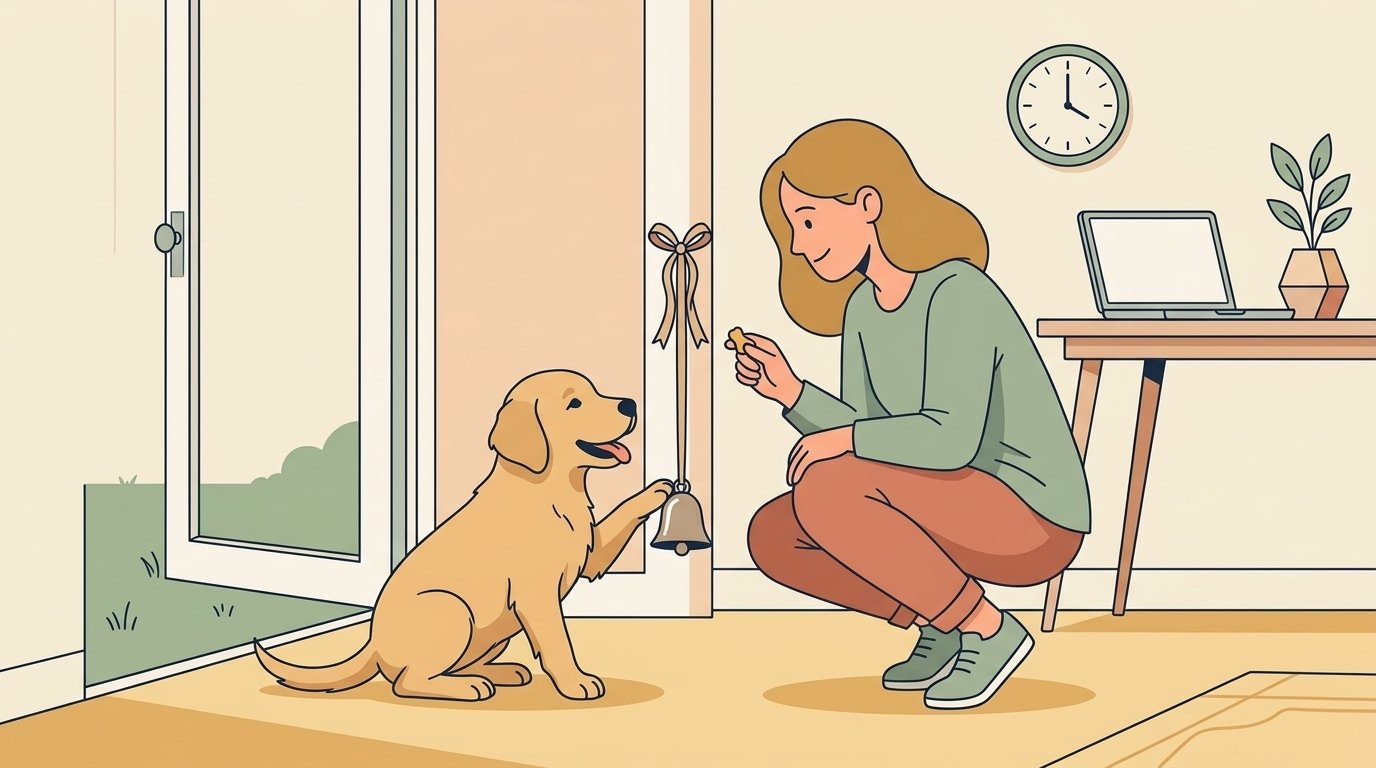
Use the same signals each time. Choose the same exit, potty area, and short verbal cue. If you use bell training, prompt the puppy to touch the bell before going out, then reward the puppy for going in the right place. A bell is a communication tool, not a substitute for a timely potty break.
That is the practical meaning of “no 24/7 supervision”: you do not have to stare at your puppy every second, but you do need a prepared environment, a routine, and a workable care plan for the hours you are away. A schedule can help manage the day. It cannot remove a puppy’s physical needs.
Inside the 7-Day Guide: What Are You Actually Buying?
Based on the product page and the product information provided, this is a digital ebook with a day-by-day plan from Day 1 through Day 7. The public page lists a busy-owner schedule, signal recognition, age adjustments, and troubleshooting. The product information also lists timed feeding, crate training, positive rewards, and bell training. The complete ebook is not available on the public page for a page-by-page review, so this breakdown sticks to the information that is visible or supplied.
The sales page identifies Mike Anderson as a Certified Professional Dog Trainer. It describes him as a former frustrated puppy owner who turned his experience into a training method. That is the seller’s description; I have not independently verified his credentials or work history. The author information on the product page
A Day 1–7 action plan: A one-week framework for getting started, repeating the steps, and tracking changes. For a new owner buried under conflicting internet advice, knowing the next step can be useful.
Timed feeding and potty tracking: Use consistent meals and observe what happens after waking, eating, drinking, and activity. The goal is to learn your puppy’s rhythm, not copy another dog’s exact clock.
Crate training and safe management: Build a positive association with the crate and use it as a rest area. Match crate time to your puppy’s age and ability; “training” should not mean crating a puppy for an entire workday.
Positive rewards and potty cues: Praise or offer a small treat immediately after the puppy goes in the right place. A consistent verbal cue or bell can connect the behavior with the reward. Clean accidents and adjust the next opportunity instead of scolding.
Signal recognition and troubleshooting: Sniffing, circling, wandering away, or becoming restless after waking can be clues. If accidents keep happening, check whether the interval is too long, the puppy has too much freedom, or the daytime care plan fits the puppy’s age.
If you want a step-by-step routine you can follow at home, these features match the product’s pitch. If you want a trainer to observe your dog and adjust the plan in real time, an ebook cannot provide one-on-one coaching.
👉 View the *Dog Potty Training in 7 Days* plan and current offer
The Honest Pros and Cons: The Good, The Bad, and The Smelly
| Review area | Pros | Cons and limits | Neutral take |
| Fit for working owners | The product is aimed at busy owners and offers a structured first-week routine. | A schedule cannot provide a potty break or care while you are away. Young puppies may need someone to stop by. | Map out daytime care before buying. If nobody can help during a long gap, fix that care gap first. |
| Practical content | The listed topics include feeding times, crate training, positive rewards, signal recognition, and bell training. | The public page lists topics but does not provide the complete ebook for an independent page-by-page review. | Treat it as a step-by-step starter guide. For medical issues or severe anxiety, consult a veterinarian or qualified behavior professional. |
| The “7 days” promise | A one-week framework is easy to start and track, and can help a household follow the same routine. | It does not mean every dog will be accident-free after seven days. Seller outcome claims have not been independently validated here. | Set the first-week goal as a better routine and fewer accidents, not perfection. |
| Age and size | The product page says it includes adjustments for different ages. | Small puppies under 12 weeks may not have mature bladder control. Accidents can continue after a week, so the routine needs ongoing reinforcement. A guide cannot make a puppy hold it too long. | Shorten intervals to fit the puppy and arrange daytime care. Ask a vet about sudden frequent urination, pain, or regression. |
| Price and refund | As checked on October 7, 2026, the sales page showed a $19 flash-sale price and a 60-day money-back guarantee. | The page lists a $120 total reference value for the package; that is not an independently verified former selling price. Prices, promotions, and refund terms can change. | Check the checkout total and current refund terms. A trainer costs more but can observe your home and give individual feedback. |
| Results claims | The sales page says it has helped 12,000+ owners or families. Product information supplied for this review also lists a 94% success rate. | The current public sales page does not show the 94% figure or provide its sample size, definition of success, or calculation method. The 12,000+ figure is also a seller claim without independent data here. | Attribute these numbers to the seller. Do not present them as independently verified results or a guarantee for an individual buyer. |
Be especially patient with a small puppy under 12 weeks. Bladder control is still developing, and an occasional accident after the first week does not mean the training failed. The AKC notes that how long a puppy can wait depends on age, and very young puppies and toy breeds may need more frequent potty trips. AKC potty-training tips
Frequently Asked Questions
Does *Dog Potty Training in 7 Days* guarantee that my puppy will be fully house-trained in one week?
No guide can promise the same timeline for every puppy. A more realistic first-week goal is to establish the potty spot and a consistent routine, then reduce accidents over time. Age, size, health, and care arrangements all affect progress.
I work full-time and cannot take my puppy out every 30 minutes. Can this schedule still work for me?
The product is designed around working schedules, but a schedule cannot replace daytime care. If your puppy needs a midday potty break, arrange a family member, pet sitter, or dog walker. You can also ask a veterinarian or training professional about a safe pen and potty area. Do not leave a young puppy in a crate for an entire workday.
Is an accident after one week a failure, especially for a small puppy under 12 weeks?
No. A very young or small puppy is still developing bladder control. Continue to offer age-appropriate potty breaks, reward the right spot immediately, and reinforce the routine.
Do I have to use crate training to potty-train my dog?
No. Crate training can be one management tool, but it should be introduced gradually and positively. If a crate is not right for your dog, ask a qualified professional about setting up a safe pen and rest area. Any confined space still needs to allow for the dog’s potty needs.
Is the current price $19, with 85% off and a 60-day refund guarantee?
When this review checked the page on October 7, 2026, the seller displayed a $120 total reference value for the package and a $19 flash-sale price, advertised as about 85% off. The $120 reference value is the seller’s figure, not an independently verified former price. The page also displayed a 60-day money-back guarantee. Prices, promotions, and refund terms may change, so check the sales page and checkout before buying.
The Final Verdict: Is It a Gifted Guide or a Marketing Gimmick?
My take: It is not magic, but it may be a useful starter guide for owners who want a clear routine and cannot organize their day around constant puppy trips. The value is in putting meals, potty signals, rewards, crate training, and daytime planning into a sequence you can start following. It is not a reliable promise that every home will be accident-free after seven days.
Here is the simple math. If an in-home trainer costs about $150 per hour, the $19 flash-sale price shown on October 7, 2026 is about one-eighth of that single session. The sales page lists a $120 total reference value for the package and advertises about 85% off. That comparison value comes from the seller; it is not verified as a previous price at which the package was actually sold. The seller also advertises a 60-day money-back guarantee. Confirm the current price and refund terms at checkout.
The two options are not the same. An ebook costs less and can be revisited. A trainer can observe your dog and home, then tailor the advice. If someone can help with your puppy’s daytime potty breaks and you mainly need an organized plan, this ebook may be worth considering. If your puppy will be alone longer than it can comfortably manage, arrange a sitter, dog walker, family help, or an appropriate safe potty area first. No PDF can open the door. If potty accidents come with frequent urination, pain, or other signs of illness, contact your veterinarian.
The product page says it has helped 12,000+ owners or families. The product information supplied for this review also gives a 94% success rate, but the current public sales page does not list that percentage or explain its sample, calculation, or definition of success. Treat both as seller-provided claims, not independently verified outcomes.
If that distinction works for you and you want to try a low-cost schedule for busy owners, check the latest price and refund terms here:
👉 Get the 7-Day Busy-Owner Schedule (60-Day Refund Guarantee)